
Flooded Crawl Space & Basement Cleanup in Bend, OR
Water under the house or in a lower level. Independent Central Oregon restoration companies pump it out, pull wet insulation and dry the floor system. Get free quotes with no obligation.
Get a Free Quote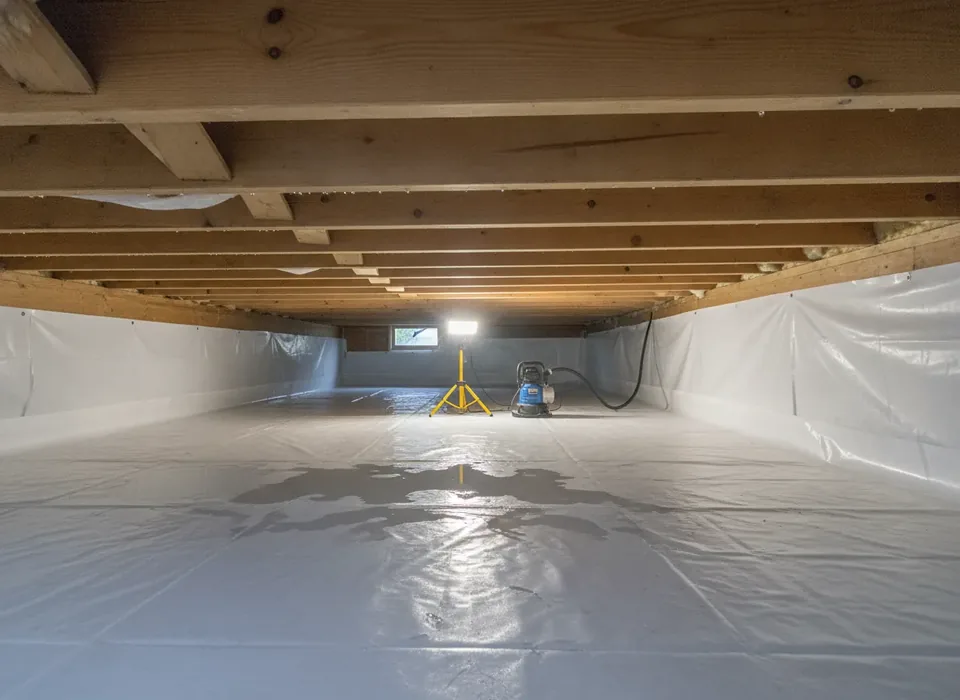
First steps when you find water under the house
Do not climb into standing water while the power is on; there may be a receptacle, a sump pump cord or a furnace down there. Kill the breakers that serve the crawl space or basement first. Then look for the source from the hatch with a flashlight: a dripping supply line or drain overhead points to plumbing, while water coming in along the foundation walls or welling up through the soil points to groundwater or snowmelt.
If it is plumbing, shut the main. If it is seepage, check that gutters and downspouts are not dumping against the foundation and that snow is not piled against the house. Photograph everything, including the water line on the posts and piers.
Then send the quote form or call Call (727) 300-6656. Independent, Oregon CCB-licensed companies that work crawl spaces and basements around Bend can reply with free quotes. Bend Water Damage Pros does not do the work; we connect you with the people who do.
What a crawl space or basement dry-out involves
Most Central Oregon homes sit over a crawl space rather than a full basement, so local crews see a lot of these. The steps are the same either way.
Inspect and map
A technician enters the space, finds the source, measures water depth and uses moisture meters on joists, subfloor and posts.
Pump and extract
Submersible pumps handle deep water; extractors pick up the rest. Where a sump exists, crews check whether it failed, lost power or was simply overwhelmed.
Remove saturated material
Wet fiberglass insulation, a soaked vapor barrier and any stored items come out. Mud and silt are shoveled or vacuumed so they do not keep the soil wet for months.
Dry the floor system
Air movers and a dehumidifier go in; in winter a crew may add heat because cold air holds little moisture and dries slowly. Readings are taken daily until framing matches a dry reference. See structural drying.
Treat, rebuild, prevent
Framing is treated with an antimicrobial where appropriate, new insulation and vapor barrier go in, and the quote should say whether grading, downspout extensions or a sump are recommended so the next thaw does not repeat the problem.
Why crawl spaces flood in Central Oregon
Snowmelt. After a heavy winter, the thaw sends water through porous volcanic soil and against foundations. The spring of 2017, following record snow, pushed the Crooked River to its highest level in about a decade and put parts of Prineville underwater; crawl spaces across the region saw seepage the same season.
A shallow water table south of Bend. Oregon DEQ describes the Sunriver–La Pine area as having porous soil and many shallow groundwater aquifers; the most common reason septic sites are denied there is that the seasonally high water table, which usually peaks after spring snowmelt, sits too close to the surface. A crawl space in La Pine, Sunriver or the Three Rivers area can take on groundwater in April through June even with no plumbing problem at all.
Frozen crawl-space pipes. Supply lines running under the house are the first to freeze in a cold snap and often leak on the thaw. If the floor above feels cold and damp after a freeze, check below. The burst and frozen pipe page covers that scenario.
Flat ground near water. The National Weather Service has noted that Tumalo is more prone to flooding than Bend because of its flatter terrain along the Deschutes and Tumalo Creek; the river there ran near 1,465 cfs in February 2014. Low-lying homes near creeks in Sisters (Whychus) and Prineville (Ochoco) face similar late-winter and early-spring risk.
Where a home does have a basement or daylight lower level, the same sources apply, plus window wells and floor drains.
Typical cost to dry a crawl space or basement
National data puts a crawl space or basement dry-out of roughly 500 square feet, with no rebuild, at $2,000–$7,000. Access and pumping add-ons are common in tight crawl spaces. Extraction is often itemised at $3.75–$4.25 per square foot for clean water and more for gray or black water, and labor runs $70–$200 per hour. New insulation, vapor barrier and any drywall or flooring in a finished basement are priced on top.
Typical ranges, national sources, Jan–2025 data; Central Oregon quotes vary. Your written quote is the real number.
Run your square footage through the calculator on the cost guide for a planning figure.
Insurance: source decides everything
Insurers draw a hard line between water that came from inside the plumbing and water that came from the ground. A split pipe draining into the crawl space is typically covered. Seepage, rising groundwater and snowmelt are typically excluded under standard policies; flood coverage comes only through NFIP or a private flood policy. Sump and drain backups often require their own endorsement. Report the loss quickly, describe the source accurately, and let the adjuster make the call. Oregon's ORS 746.230 requires a reasonable investigation before a denial, and you can contact the Division of Financial Regulation's consumer advocates if a claim stalls.
Call right away if
- Water is touching the furnace, water heater or electrical equipment in the space.
- Water is rising rather than holding steady.
- The floor above is spongy, cold or smells musty.
- Insulation is hanging in wet sheets from the joists.
- The home is on septic and drains are also slow; see sewage backup cleanup.
The full sequence from inspection to rebuild is on our process page.
Crawl space and basement FAQ
Is a wet crawl space really an emergency?
Standing water under the house is not as urgent as water in the living room, but it should not wait a week. Wet insulation sags and stays wet, joists and subfloor wick moisture, and humidity migrates up into the house. If the water came from a plumbing line, treat it like any other leak. If it is seepage, get it pumped and dried within a few days and find out why it got in.
Does insurance cover water in a crawl space or basement?
It depends on where the water came from. A burst supply line or failed water heater that drains into the crawl space is typically a covered sudden loss. Groundwater seepage, snowmelt coming through the foundation and surface flooding are usually excluded unless you carry flood insurance. Sump failures and drain backups often need a separate endorsement. Check your policy and ask your adjuster.
Can I just run a fan down there instead of hiring someone?
For a damp spot after a minor spill, maybe. For standing water, wet insulation or a vapor barrier full of puddles, no. A box fan moves air but does not remove moisture, and in a sealed crawl space it can push humid air into the floor system. Professional dry-outs pair air movement with dehumidification and verify results with a meter.
How long does it take to dry a crawl space in Central Oregon?
Plan on several days to a week or more for a typical crawl space, longer in winter when the ground and air underneath are cold. Bend's dry climate helps once equipment is set, but a crawl space is the coldest part of the house and evaporation slows down below about 60°F. The company should give you a drying goal and daily readings rather than a guess.
Will the insulation need to be replaced?
Wet fiberglass batts usually come out. They lose insulating value when saturated, hold water against the subfloor and are hard to dry in place. Expect a quote to list removal, disposal, drying of the floor system and new insulation, often with a fresh vapor barrier over the soil. Ask whether the quote includes the rebuild or just the dry-out.
Get free quotes from Central Oregon restoration companies
Tell the companies roughly how deep the water is, where you think it came from and whether the space is accessible. Independent Central Oregon restoration companies reply with free, no-obligation quotes.
Water where it shouldn't be? Get free quotes.
Tell us what happened and independent Central Oregon restoration companies can reply with no-obligation quotes.