
Sewage Backup Cleanup in Bend, OR
Toilets backing up, a septic tank overflowing or a sewer line that let go. Category 3 water needs trained crews, containment and proper disposal. Independent Central Oregon companies reply with free quotes.
Get a Free Quote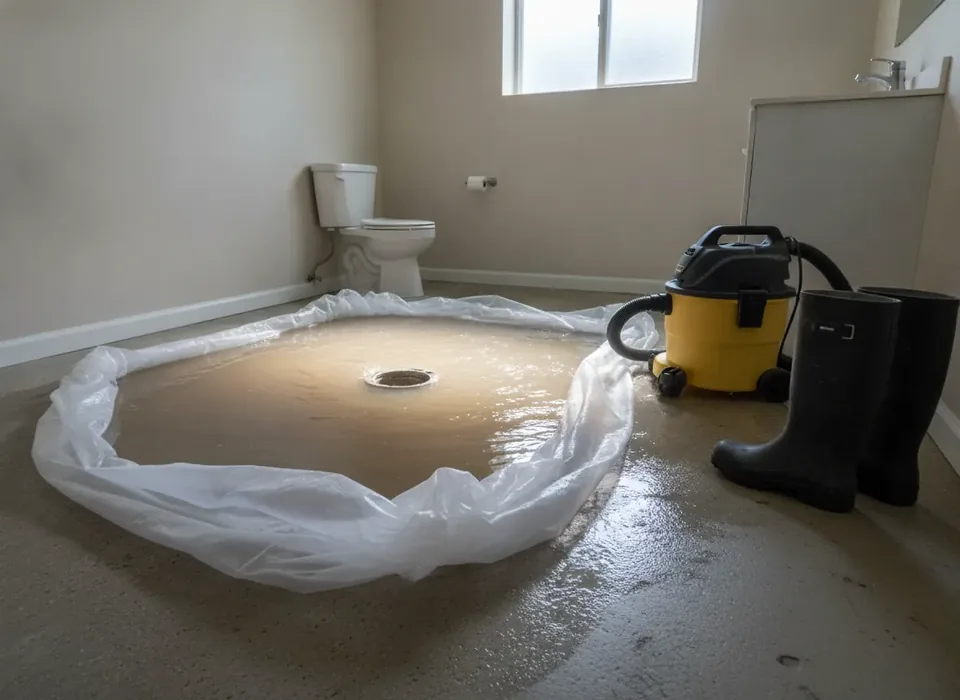
Keep everyone out, then make the calls
Sewage is Category 3 water: grossly contaminated, whatever it looks like. Stop using every drain and toilet in the house, because anything you run comes back up. Keep children and pets away from the area. Shut off the furnace fan if the return air is near the spill so aerosols are not pushed through the house, and do not set up box fans for the same reason.
If you are on city sewer and several fixtures are backing up at once, call the city's public works line as well; a blockage in the main is their problem and they will want to know. If you are on septic, call a pumper. Either way, photograph the area from the doorway and note what came up and where.
Then send the quote form or call Call (727) 300-6656. Bend Water Damage Pros connects you with independent, Oregon CCB-licensed restoration companies that handle Category 3 losses; we do not perform the work and the quotes carry no obligation.
Health comes first. Wash hands and anything that touched the water. If anyone develops stomach illness, fever or a rash after contact, see a doctor and mention the exposure.
How a Category 3 cleanup is done
The IICRC S500 standard treats sewage differently from clean water at every step.
Contain and protect
Crews seal the affected area with plastic, set up negative air where practical, and work in full protective gear: suits, gloves, boots, eye protection and respirators.
Remove waste and water
Solids are bagged for disposal; contaminated water is pumped out with equipment that will be decontaminated afterward, not the same extractor used on a clean loss.
Strip porous materials
Carpet, pad, soaked drywall, insulation, particleboard cabinet bases and cardboard boxes are removed and bagged. In pre-2004 homes an asbestos survey is still required before drywall or flooring is torn out; a good company will tell you up front.
Clean, then disinfect
Hard surfaces are cleaned of residue first, because disinfectants do not work through grime, then treated with an EPA-registered disinfectant with the correct dwell time. Studs, subfloor and concrete get the same treatment.
Dry and clear
Drying equipment runs until moisture readings meet target. Some companies offer a post-remediation surface test; you can also hire an independent hygienist for one. Rebuild follows.
Sewage and septic in Central Oregon
Inside Bend and Redmond most homes are on municipal sewer, and backups usually trace to a blocked lateral, roots in the line, or a city main surcharged during a fast thaw. Outside city limits the picture changes. South county, from Sunriver through the Three Rivers area to La Pine, is predominantly septic, and Oregon DEQ has studied it closely because of nitrate pressure on shallow groundwater. DEQ notes that the seasonally high water table there, which peaks after spring snowmelt, is the single most common reason septic site applications are denied.
That same water table is why south-county septic systems back up in spring. A saturated drainfield cannot accept effluent, the tank fills, and the lowest fixture in the house, often a shower or a floor drain, is where it shows.
Septic properties also rely on private wells for drinking water. A backup inside the house is a plumbing event, not a well event, but a failing drainfield is worth discussing with both the septic installer and the county. Pumping and repairing the system is separate from the interior cleanup; the restoration company handles the house, the septic contractor handles the system.
In older rural homes and cabins around Sisters, Tumalo and Prineville, backups sometimes reach the crawl space through a broken drain line. That is still a Category 3 cleanup, with soil removal added to the scope.
What sewage cleanup typically costs
Sewage backup cleanup typically runs $2,000–$10,000 depending on area, how far it spread and what has to come out. Black-water extraction is itemised at about $7–$7.50 per square foot, the highest category rate, because of the protective equipment, disposal and disinfection steps. Replacement carpet adds roughly $4.75–$10.50 per square foot and new drywall $1.50–$3 per square foot. A backup that fills a finished lower level can run well beyond these figures.
Typical ranges, national sources, Jan–2025 data; Central Oregon quotes vary. Your written quote is the real number.
The cost guide explains why Category 3 sits at the top of the scale and what drives the rest of the quote.
Insurance: check for a backup endorsement
Standard homeowner policies frequently exclude water that backs up through sewers or drains unless you bought a water backup or sewer backup endorsement; the same endorsement usually covers sump failures. Septic system repairs are often excluded as maintenance. Coverage for the resulting interior damage varies widely, so read your declarations page or ask your agent before assuming either way. Report the loss promptly, keep photos of the contaminated area and of discarded items, and keep receipts for emergency measures. Oregon's claim-handling statute, ORS 746.230, requires insurers to investigate reasonably and respond in a timely way.
This is always an emergency when
- Sewage has reached carpet, a bedroom or a kitchen.
- It is still coming up and you cannot stop using water (a household with no alternative).
- Someone in the home is immunocompromised, pregnant, elderly or an infant.
- The backup is in a crawl space under living areas.
- The source is unknown and could be a city main.
What happens after the crew arrives, step by step, is on the process page. If a backup sat for days before you found it, read about mold after water damage too.
Sewage cleanup FAQ
Does a septic backup count as sewage damage?
Yes. Water that comes back up a drain from a septic tank or drainfield is Category 3, the same as a municipal sewer backup, because it carries the same pathogens. Cleanup follows the same rules: porous materials out, hard surfaces cleaned and disinfected, structure dried. You will also need a septic pumper or installer to deal with the tank or field itself.
Can carpet be saved after a sewage backup?
Industry practice is to remove and dispose of carpet and pad that have contacted sewage. The fibers and backing cannot be reliably disinfected, and the pad soaks up contaminated water like a sponge. Hard flooring over a sound subfloor can often be cleaned and kept. Expect the quote to list carpet replacement at roughly $4.75–$10.50 per square foot.
Is it safe to clean up a small sewage backup myself?
A cup of water around a toilet base is one thing; a room or a crawl space is another. Sewage can carry bacteria, viruses and parasites, and aerosols spread when it is agitated. If you do handle a very small area, wear waterproof gloves, boots and eye protection, bag everything porous, disinfect, and wash thoroughly afterward. For anything larger, or if anyone in the house is pregnant, very young, elderly or immunocompromised, hire it out.
How long before we can use the room again?
Cleanup and disinfection of a single room often takes one to two days, followed by several days of drying before rebuild. Companies typically keep the area contained and off limits until drying is complete. Ask for the drying log and, if you want independent confirmation, a post-cleanup surface test.
We are on a well in La Pine. Should we test our water after a septic backup?
It is a reasonable step. DEQ notes that private wells are the main drinking water source for septic properties in the Sunriver–La Pine area and that the shallow groundwater there is vulnerable to septic contamination. A backup inside the house does not by itself mean the well is affected, but a failing drainfield might. A basic bacteria test is inexpensive; your county health department can point you to a lab.
Get free quotes from Central Oregon restoration companies
Say where the backup appeared, whether you are on sewer or septic, and roughly how large the area is. Independent Central Oregon companies experienced with Category 3 losses reply with free quotes.
Water where it shouldn't be? Get free quotes.
Tell us what happened and independent Central Oregon restoration companies can reply with no-obligation quotes.