Water category
Category 1 is clean supply water. Category 2 (gray) is dishwasher, washer or shower overflow. Category 3 (black) is sewage, septic backup or outside floodwater. Each step up means more protective gear, more disinfection and more material thrown away rather than dried.
Class of loss
Class describes how much of the room absorbed water and how hard the materials are to dry. Class 1 is a small area of low-porosity material; Class 4 is water bound into hardwood, plaster, concrete or crawl-space soil that needs specialty drying over many days.
Time on the floor
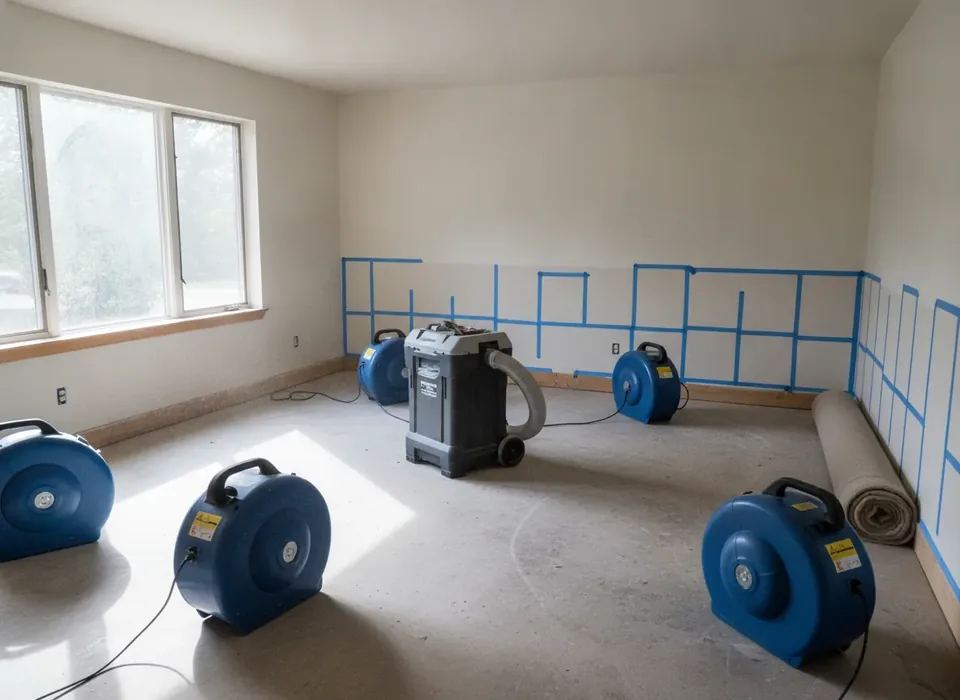
Hours matter. Carpet pad caught the same day can often be dried in place. After a few days, pad, baseboard and the bottom of the drywall usually come out, and restorers in Bend typically say mold can start within one to two days in trapped moisture.
Tear-out and the asbestos survey
If drywall, flooring or insulation must be removed in a home built before January 1, 2004, Oregon DEQ requires an asbestos survey first (OAR 340-248-0270). The survey itself is an added cost, and positive results mean a DEQ-licensed abatement contractor handles that material. Pre-1978 homes add lead-safe work rules, which only CCB LBPR licensees may bid on.
Access and distance
A crawl space with 18 inches of clearance takes longer to pump, strip and dry than an open room. Companies based in Bend or Redmond may add travel time for Sunriver, La Pine, Madras or Prineville. Ask whether mileage is on the estimate.
Rebuild versus mitigation
Mitigation (extraction, demo, drying) is usually billed separately from rebuild (new drywall, paint, flooring). In Oregon, water removal needs at least a CCB Residential Restoration endorsement, while tear-out and rebuild need a general or specialty endorsement, so sometimes two licensed companies are involved.